
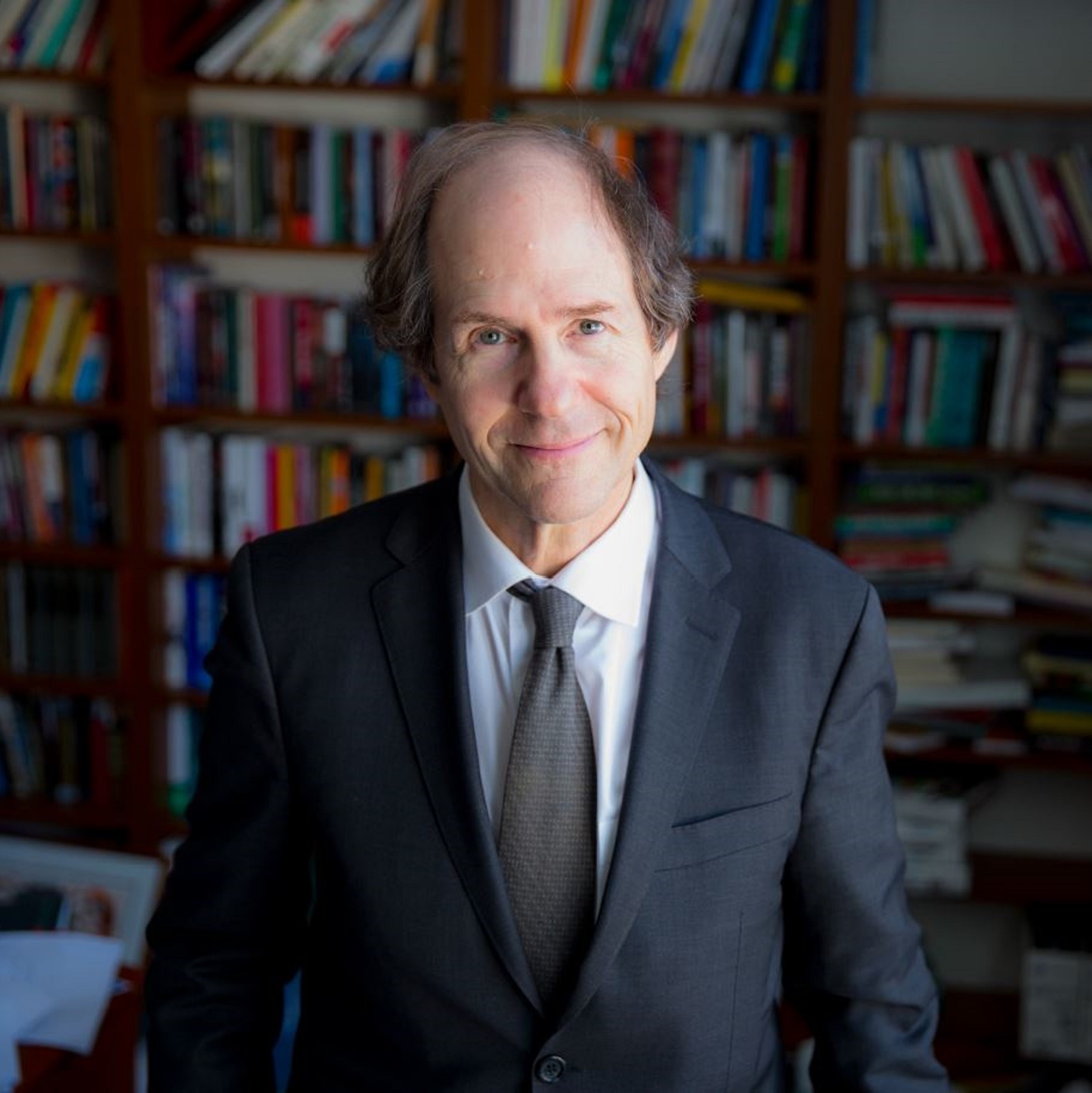
profile-photo

Cass Sunstein

Professor at Harvard, Co-Author, "Wiser: Getting Beyond Groupthink to Make Groups Smarter"

Add to wishlist

Book Cass Sunstein

Cass R. Sunstein is currently the Robert Walmsley University Professor at Harvard. He is the founder and director of the Program on Behavioral Economics and Public Policy at Harvard Law School. In 2018, he received the Holberg Prize from the government of Norway, sometimes described as the equivalent of the Nobel Prize for law and the humanities. In 2020, the World Health Organization appointed him as Chair of its technical advisory group on Behavioral Insights and Sciences for Health. From 2009 to 2012, he was Administrator of the White House Office of Information and Regulatory Affairs, and after that, he served on the President's Review Board on Intelligence and Communications Technologies and on the Pentagon's Defense Innovation Board. Cass has testified before congressional committees on many subjects, and he has advised officials at the United Nations, the European Commission, the World Bank, and many nations on issues of law and public policy. He serves as an adviser to the Behavioral Insights Team in the United Kingdom.


Cass is author of hundreds of articles and dozens of books, including his most recent books: How to Become Famous: Lost Einsteins, Forgotten Superstars, and How the Beatles Came to Be (May 2024), Look Again: The Power of Noticing What Was Always There (Feb 2024), How to Interpret the Constitution (2023), Decisions About Decisions: Practical Reason in Ordinary Life (2023), Default Nudges: From People's Experiences to Policymaking Implications (2023), Bounded Rationality: Heuristics, Judgment, and Public Policy (2022), Nudge: The Final Edition (2021), Sludge: What Stops Us from Getting Things Done and What to Do About It (2021) and Too Much Information: Understanding What You Don't Want to Know (2020).

Speaking Topics

Look Again: The Power Of Noticing What Was Always There

Have you ever noticed that what is thrilling on Monday tends to become boring on Friday? Even exciting events and objects lose their sparkle after a while. People stop noticing what is most wonderful in their own lives, and they also stop noticing what is terrible - they get used to dirty air, stay in unhealthy relationships, grow to accept authoritarianism and take foolish risks, But, asks Harvard Law professor Cass Sunstein, what if we could find a way to see everything anew and gain sensitivity, not only to the great things in your life, but also the terrible things you stopped noticing and so you don't try to change? In a groundbreaking study, encapsulated in his book Look Again, Sunstein and his co-author investigate why we stop noticing both the great and not-so-great things around us how to "dishabituate" at the office, in the bedroom, at the store, on social media and in the voting booth. Based on decades of research in the psychological and biological sciences, he illuminates how to refresh your perspective, allowing you to more clearly identify the bad, and more deeply appreciate the good.

How To Become Famous

It’s hard to imagine our world without its stars, icons, influencers and celebrities – the rich and famous that flood our media. They’re part of our culture and history, seeming permanent and preordained. That’s far from the case, as Harvard Law professor Cass Sunstein shows in his book How to Become Famous. Focusing on both famous and forgotten (or simply overlooked) artists and luminaries in music, literature, business, science, politics and other fields, he explores why some individuals become famous and others don’t and offers a new understanding of the roles played by greatness, luck and contingency in the achievement of fame. With lessons for marketers, executives and leaders alike, Sunstein examines recent research on informational cascades, network effects and group polarization to probe the question of how people become famous. He leads audiences on a fun, captivating and at times profound journey that will forever change your perspective on the latest celebrity’s “fifteen minutes of fame” and on what vaults some to the top — and leaves others in the dust.

Robots Run By Generative AI Are Here – Should They Have Rights?

Generative AI has led to the definition of “sentience” becoming more of a question than a statement. If AI tools can “think,” should they have rights? No more than your toaster should have rights, says Harvard Law professor Cass Sunstein, a prominent legal scholar and well-known authority on the U.S. Constitution. Funny and engaging, Sunstein uses accessible metaphors and pop culture references to illustrate what generative AI is, how it works and why, even though it seems humanlike in its interactions, it doesn’t deserve any more rights than a blanket on a bed. Sunstein brings organizations thought-provoking questions that encourage deeper thinking about how to engage with AI technology, no matter how quickly it advances.

Noise And Bias

Human beings are sometimes “biased,” in the sense that they make systemic mistakes (for example, they might show “optimistic bias”). In addition, human beings are sometimes “noisy,” in the sense that they show unwanted variability (perhaps making different decisions in the morning and the afternoon). The best solution to both noise and bias, says Harvard Law School professor Cass Sunstein, comes from “decision hygiene,” which can include the use of formal models and algorithms. In this presentation based on his award-winning book Noise: A Flaw in Human Judgement (2021), Sunstein illuminates concrete ways to reduce or even eliminate widespread “algorithm aversion.”

How To Defuse Polarization And Bridge Divides In Politics, Business And Society

While polarization is an age-old problem, managing and governing people in the 21st century has been complicated by increasingly divisive rhetoric within online and in-person groups, creating damaging political and social divisions in every corner of the world. Business and government leaders looking for successful ways to bridge those divides will find Harvard Law School professor Cass Sunstein’s insights invaluable. In this presentation, he shares the results of experiments he’s conducted, which explain why such divides exist. He then outlines methods leaders can employ to promote unity, understanding and, ultimately, a successful way forward to solve common problems and reach common goals.

Cass Sunstein's Experiences

EXPERIENCE DETAILS

*
Virtual In-Person

Experience Details

Virtual In-Person
I'm prepared to move to contract immediately if my offer is accepted.

Payment Terms

+
=
I understand that submitting this firm offer form is a legally binding offer to contract with the talent on the terms above, should the talent accept them within 5 business days of when this form is submitted. I further agree to Engage's standard booking terms & conditions.

Start With Curated Recommendations From Our Expert Team

We book thousands of speakers each year for clients ranging from Fortune 10 companies to local associations. Every event is unique. That's why the best place to start your search is with a list of recommendations tailored to your thematic goals, audience profile, and budget. Fill out the form below to get started!

0 0
$5000 $21000
X