
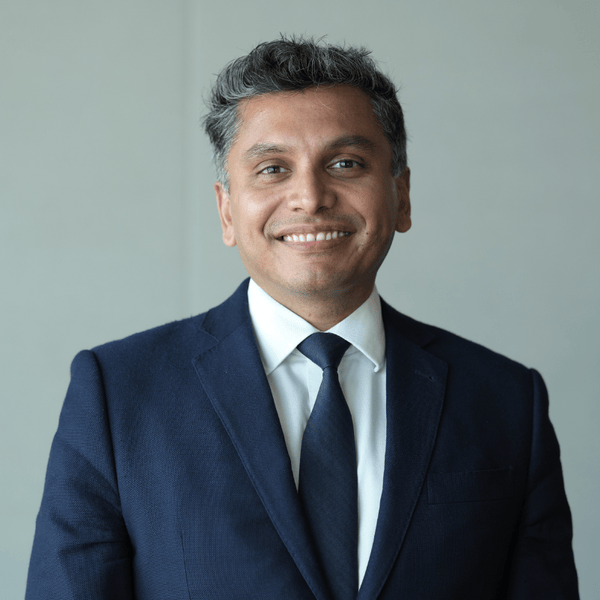
Amidst deepening divisions in society today, how can leaders ensure that their businesses continue to operate effectively, stay resilient, and even grow? With public confidence in our core institutions at alarming lows and polarization in society at dangerous highs, leaders need to cultivate new capabilities to keep their organizations together and to help people around them thrive, notes Karthik Ramanna, Ph.D. At the core of getting this done is continually building and rebuilding trust, he observes.
As an advisor to senior leaders and through engaging keynotes and workshops, Ramanna offers practical frameworks for achieving both goals – leading in a time of societal discord and reliably measuring and reporting on sustainability efforts. In his book, The Age of Outrage: How to Lead in a Polarized World (Harvard Business Review Press, October 2024), which was named one of Forbes 10 best business books of 2024, Ramanna expands on his popular Oxford course, “Managing in the Age of Outrage” and its companion HBR article to provide leaders with steps they can take to make sense of the animosity around them, work constructively to overcome it, and emerge as a stronger organization. In the book, Ramanna offers a practical 5-stage framework with step-by-step recommendations for how leaders can help address this critical business and societal challenge. Drawing on disciplines as diverse as neuroscience and literary criticism, together with common sense wisdom and real-world case studies, he provides an accessible toolkit for a new resilient managerial system for today’s increasingly divided society.
Many agree that addressing global climate change is more urgent than ever, but “a patchwork of voluntary carbon disclosure efforts by companies has paradoxically facilitated greenwashing by some and affected public trust in corporate sustainability efforts overall,” notes Ramanna, co-chair of the Carbon Measures and International Chamber of Commerce’s Technical Expert Panel on Carbon Accounting. Among the world’s top authorities on corporate financial accounting and auditing, Ramanna urges corporations to implement that same rigorous approach to measuring decarbonization efforts and eventually to sustainability activities more generally. To address this, Ramanna and Harvard Business School senior fellow Robert S. Kaplan have created The E-ledgers Institute, a non-profit that aims to give organizations a verifiable global method for accounting for their carbon emissions and offsets. The Institute’s E-liability method is the only-known system to accurately report corporate greenhouse gas emissions to a “true-and-fair” assurance standard across supply and distribution chains.
Ramanna, who was named to the 2025 Thinkers50 Radar Class of thought leaders likely to influence management and leadership in the coming years, helps leaders understand the important role that universal, accurate accounting plays in successful corporate responsibility and sustainability initiatives and how a standardized global method for measuring carbon emissions and footprints is crucial to creating new sources of value for shareholders and society at large. Ultimately, Ramanna’s frameworks and tools help nurture greater trust in business and society. He offers organizations practical approaches for leading in today’s heated social climate, accurately accounting for climate change initiatives, and designing reporting standards that promote transparency and stability in the global financial system.




































“In a world prone to outrage, leaders must navigate with grace, resilience, and strategic insight. This book provides the tools for managing effectively amidst turmoil, ensuring your organization not only endures but thrives.”
“In a world prone to outrage, leaders must navigate with grace, resilience, and strategic insight. This book provides the tools for managing effectively amidst turmoil, ensuring your organization not only endures but thrives.”